
Updated
Repeat one clear detail from the ceremony look, then change the silhouette or proportion. The outfits will feel related without making the reception dress look like a shortened copy of the gown. Silk, a neckline curve, a corseted waist, ivory colour or one accessory can carry the connection.

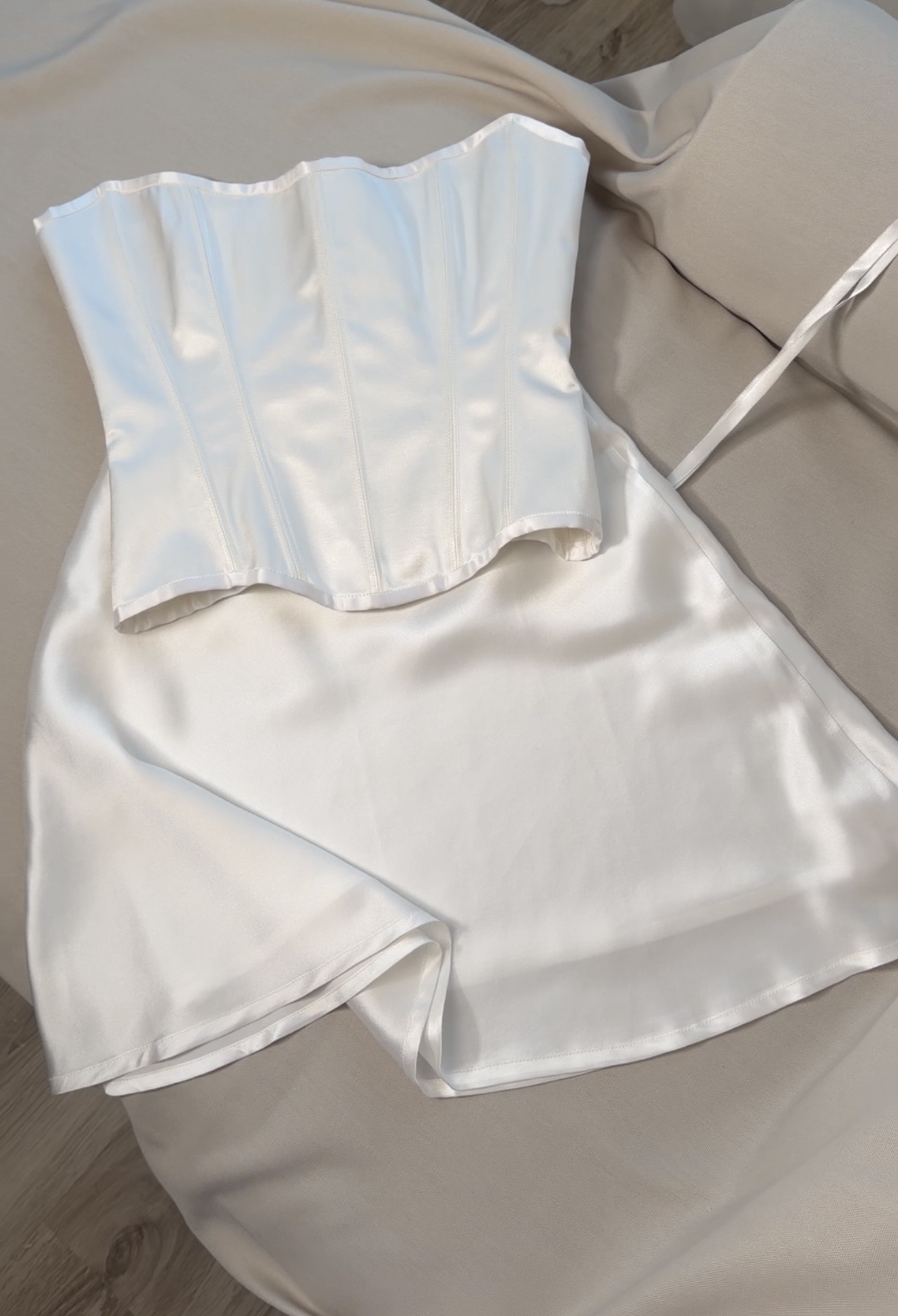
Repeat one thing and change one thing
A floor-length corseted gown can lead to a corset mini with a similar neckline. A smooth silk ceremony dress can lead to silk separates, changing the waistline while keeping the same surface. A lace gown can connect to a cleaner second look through one lace or beaded detail rather than repeating lace everywhere.
Accessories can do the same work. A scarf can echo the movement of a veil; earrings can repeat a shape from the gown; shoes can carry the same colour into a shorter hem. Pick the connection you would notice first in a photograph. If it takes a paragraph to explain, choose a clearer detail.
Compare both looks on one page
Save front and back views of both outfits side by side. Circle the shared feature, then write down what changes: length, neckline, sleeves, fabric, colour or separate pieces. Add the planned veil, jewellery and shoes. This catches accidental repetition as well as details that pull the two looks in unrelated directions.
You may not need a full outfit change. Keeping the main garment and removing a scarf or detachable sleeves can create a second version while preserving the strongest line from the ceremony. See our guide to a second bridal look without a full change if the timeline is tight.
If you want Room 22 to adapt an existing design around a ceremony gown, send the gown views, the design you like and the one feature you want to carry across through the inquiry form.