
Updated
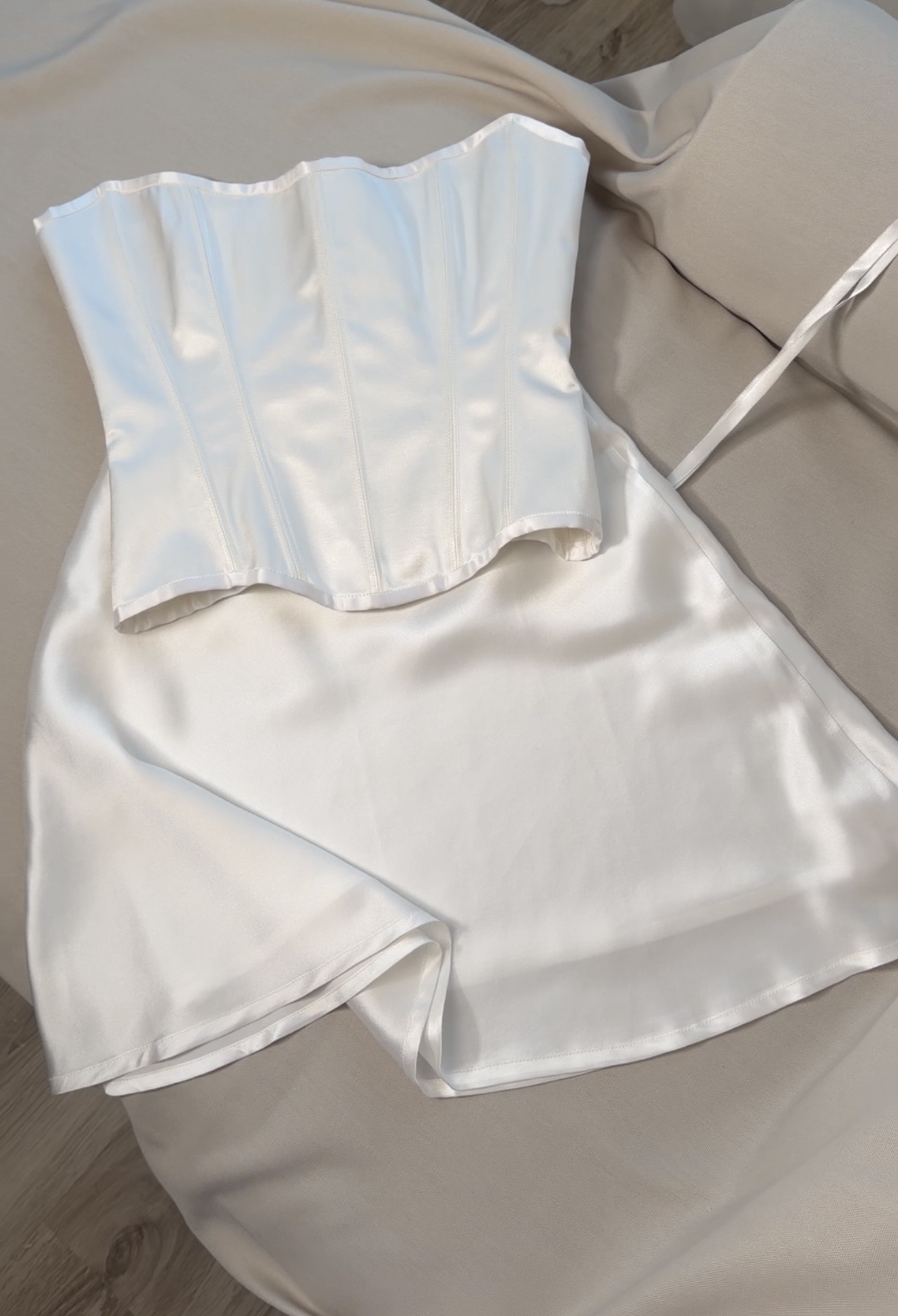
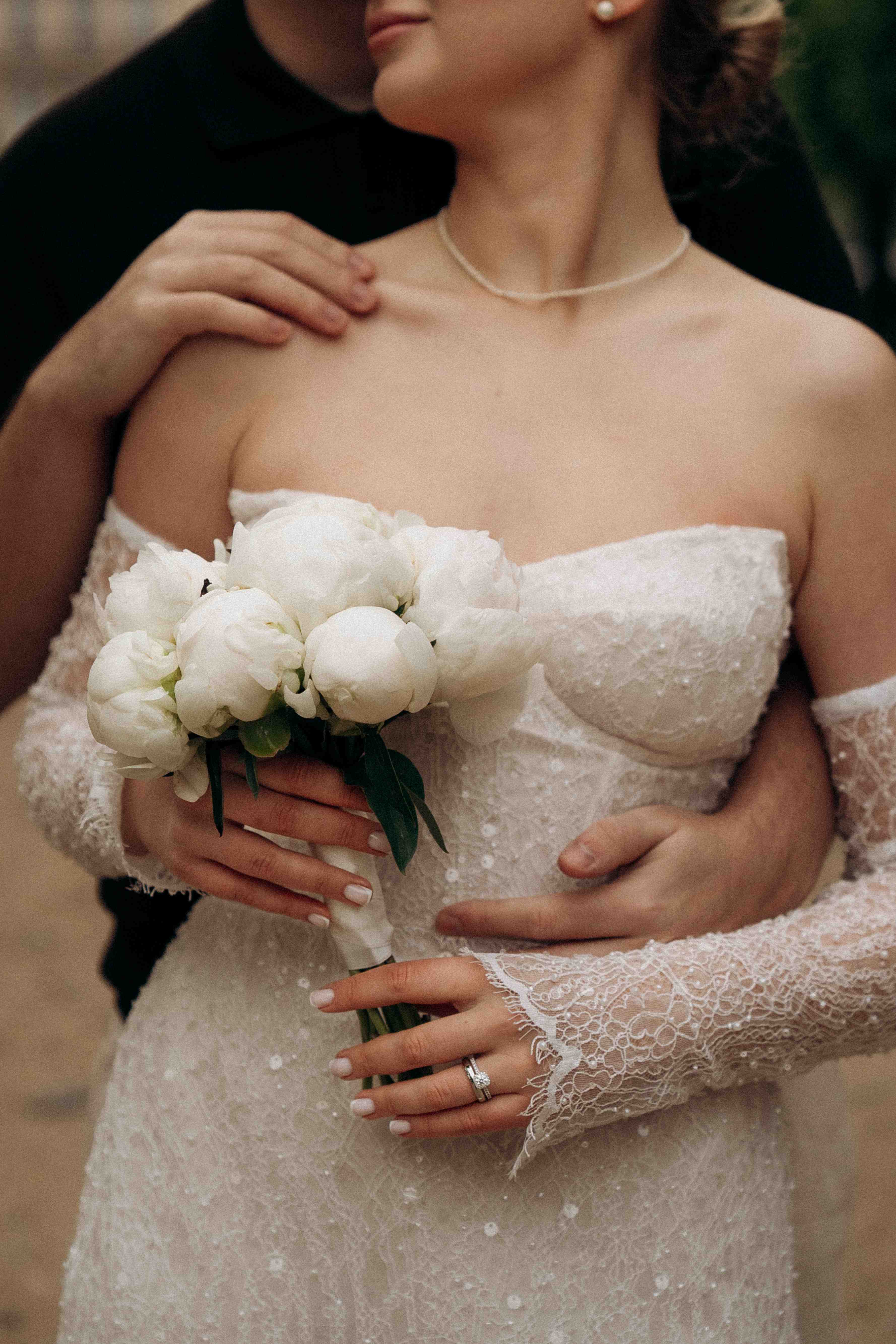
A scoop-neck corset reads as one continuous curve across the front. A cupped corset makes each cup and the centre front part of the design. The better choice is the line you want to see, rather than an assumption that one neckline will automatically give more support or coverage.
Compare the line from three angles
Room 22's Mini Silk Corset Set shows the scoop as a smooth curve that continues towards the sides of the bodice. The Bespoke Lace Corset Dress uses shaped cups, so the cup outlines, centre front, beaded lace and detachable sleeves all share the attention.
Put a front, side and back image of each option next to your ceremony gown, jewellery and hairstyle. In the scoop version, watch where the lowest point of the curve sits and how the neckline meets the underarm. In the cupped version, compare the height and shape of each cup, the space at centre front and whether sleeves make the neckline feel more enclosed.
Turn vague preferences into visible changes
If you want "more coverage," mark what should move: the centre curve, cup edge, side height or sleeve line. If you want a softer neckline, show whether that means a wider scoop or less definition around the cups. Those notes give the atelier a design decision it can discuss.
Our measurement guide covers bust, waist, high hips and full hips. A cupped or altered neckline may require more information for your order, so wait for the requested list before measuring extra points yourself.
Send Room 22 the design name, three-view references and marked neckline changes. Include what you need from the fit, such as coverage at the sides or room to raise your arms, alongside the neckline shape you like.