
Updated
When choosing a drop-waist corset, look at where the lower edge sits from the front, side and back, then check it while seated. The name alone leaves too much open: the centre front can dip sharply or gently, the side can end higher, and the back can stay level or continue the longer line.
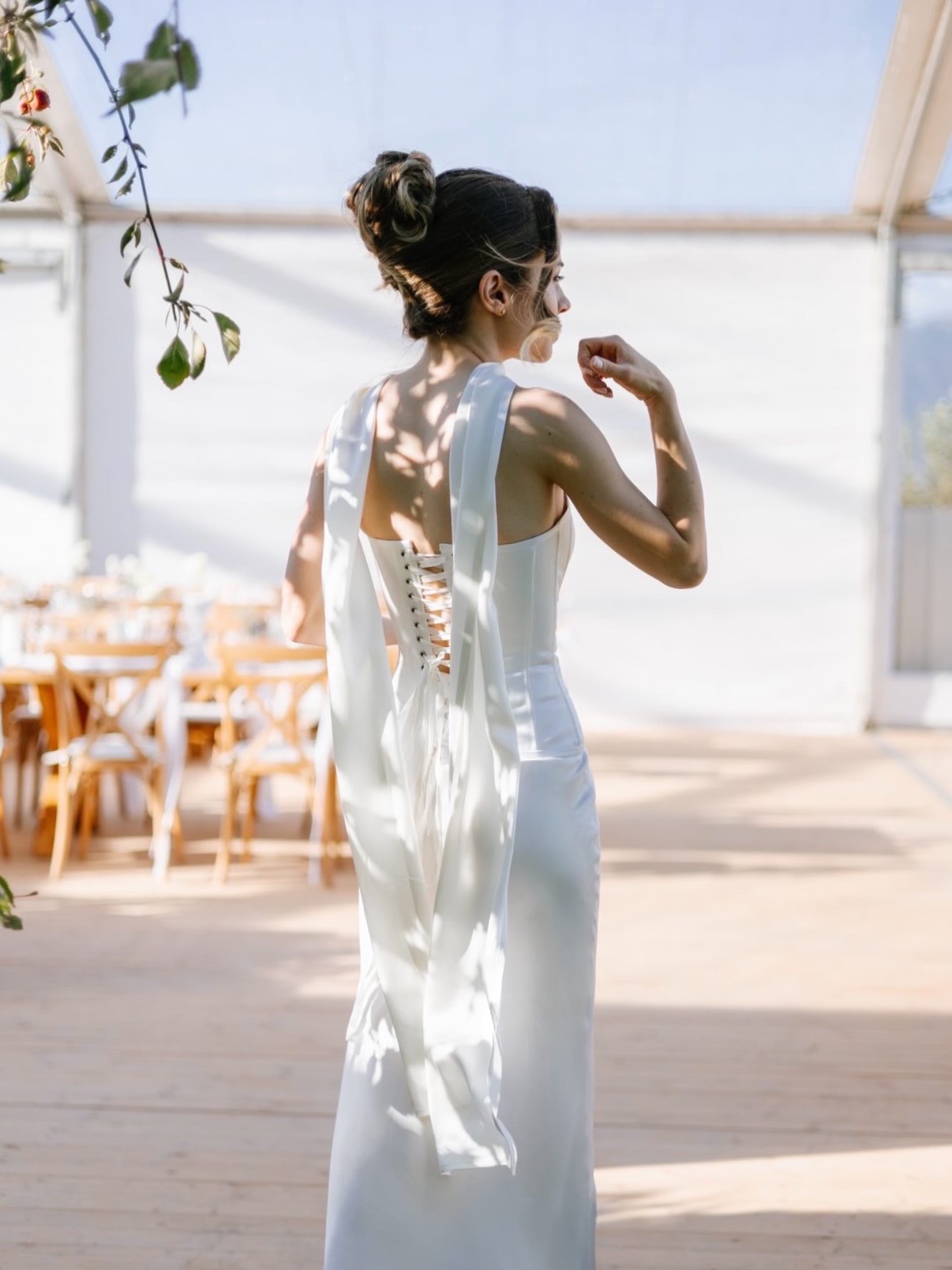
Name each part of the lower edge
Start with the centre-front dip and mark its lowest point in relation to your natural waist and high hips. Then mark the side length and back edge. A useful reference set shows all three, because a dramatic front point can look almost straight from the side. Add one seated view to show how much length you are picturing near the hip crease.
Now place the skirt underneath it. Decide whether the waistband should be visible, meet the corset edge or disappear behind it. Check that choice at the front and sides. If the skirt sits higher than the reference, it may cover part of the dip; if it sits lower, it may leave a gap you did not intend. Our guide to choosing a bias-cut silk skirt helps you set the waistband and hem together.
Build a four-view brief
For custom work, we agree the lower-edge shape, skirt overlap and seated length as separate design decisions. A small change may work within an existing design; a deeper dip or a different shape around the hips may need more development. Your quote should state how the shape will be developed and whether a mock-up or fitting round is useful for it.
Send Room 22 front, side, back and seated references, plus the exact skirt you plan to wear. Mark the centre-front dip, side length, back edge and intended waistband overlap so the atelier can respond to the shape you mean.